Water Extraction in Anoka, MN
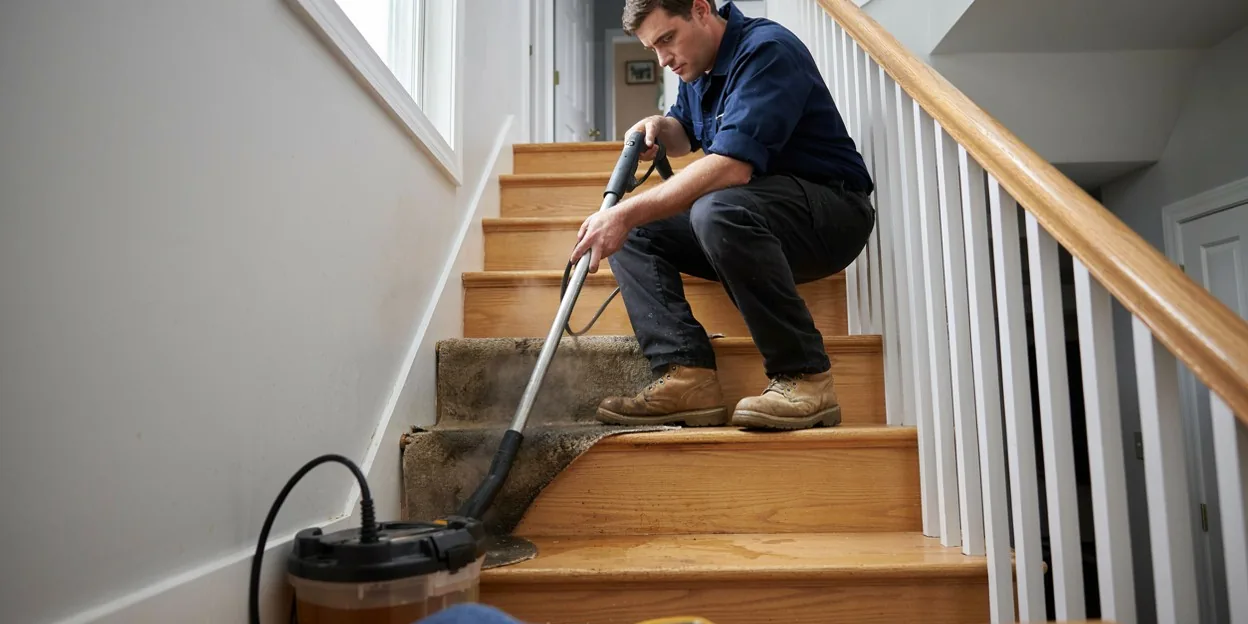
You came down the stairs for the laundry and the last step splashed. The concrete is under an inch of water from the furnace room to the storage shelves, and the boxes on the bottom shelf have already gone soft. This site puts you through by phone to an independent local provider who pulls standing water out of Anoka homes and out of houses across Anoka County.
Getting the bulk water off the floor in the first hour
Extraction is the first job and the quickest one. A truck-mounted or portable pump takes the standing water off concrete, tile, and vinyl, and a weighted extractor presses the water up out of carpet and pad where the carpet is worth saving. The point is speed: every hour water stands on a floor, more of it wicks into the bottom of the walls and under the flooring, and the drying job that follows gets longer.
While the pump runs, the crew walks the level with a moisture meter and marks where the wet readings stop. That map is the scope. It tells the crew which rooms need equipment and which do not, and it goes into the log for your adjuster.
Where the water usually came from in an Anoka house
Extraction is the same whether the source was a pipe or the ground, but the next step is not. Water from a split supply line or a failed water heater is clean and the materials it touched can often be dried in place. Water that rose out of the sump pit or the floor drain is groundwater or worse, and the crew treats what it touched differently. Tell the person who answers where you think the water started, and if you do not know, say so.
Your part before the crew arrives
Shut off the breaker to the wet level if the panel is dry. Close the main if the water is coming from inside the house. Move what you can lift up off the floor, and photograph the water line on the walls and the boxes before anything moves. Do not use a household vacuum on standing water, and do not run the furnace fan to dry the room.
What happens to the floor and the walls next
Once the standing water is gone, the crew lifts the carpet and pulls the pad, because pad holds water like a sponge and never dries in place. Hardwood on a main level gets metered and, if the water was clean and caught early, may be dried with mats rather than replaced. Vinyl plank over concrete usually comes up so the slab can dry. The bottom foot of drywall gets metered and opened where it reads wet.
Then the equipment goes in. Structural drying sets air movers and dehumidifiers by the readings and runs them until the block, the framing, and the drywall come back to the dry number. If the water reached a finished basement wall to wall, the job continues as a basement flooding cleanup. If it came from a split line in January, it continues as a frozen pipe cleanup.
The Anoka floor plan and why water travels the way it does
Most of Anoka's housing went up between the early 1950s and the late 1970s: ramblers north of Highway 10, split-levels and split-entries along the streets between the Rum and the Mississippi, all over full basements with a poured floor that slopes toward a single drain. That slope is the problem and the help. Water from a leak in the utility corner runs across the whole floor to reach the drain, so a finished room on the far side gets wet from a source it never saw. The good news is the same slope lets the pump find the low spot.
The older houses on Christian Hill and in Swede Town have stone or early block foundations with uneven floors and no drain at all, and water there sits in whichever corner is lowest until it is pumped.
A sudden pipe or appliance failure is often treated as covered damage by homeowner policies, while groundwater and drain backups often are not. This site cannot say what your policy pays. The extraction crew photographs and logs the first visit so the record starts on day one.
What to say when you call about standing water
Say which level is wet, how deep the water is, whether it is still coming in, and whether it came from a pipe, an appliance, or the floor. Call (763) 363-6050.