Sewer Backup Cleanup in Anoka, MN
The rain had been coming down for a day and a half when the smell reached the top of the basement stairs. Downstairs, gray water was standing around the floor drain in the laundry room and had spread under the door into the carpeted family room, and it was not rainwater. This site puts you through by phone to an independent local provider who cleans up sewer backups in Anoka and across Anoka County.
Treating the water by what came up with it
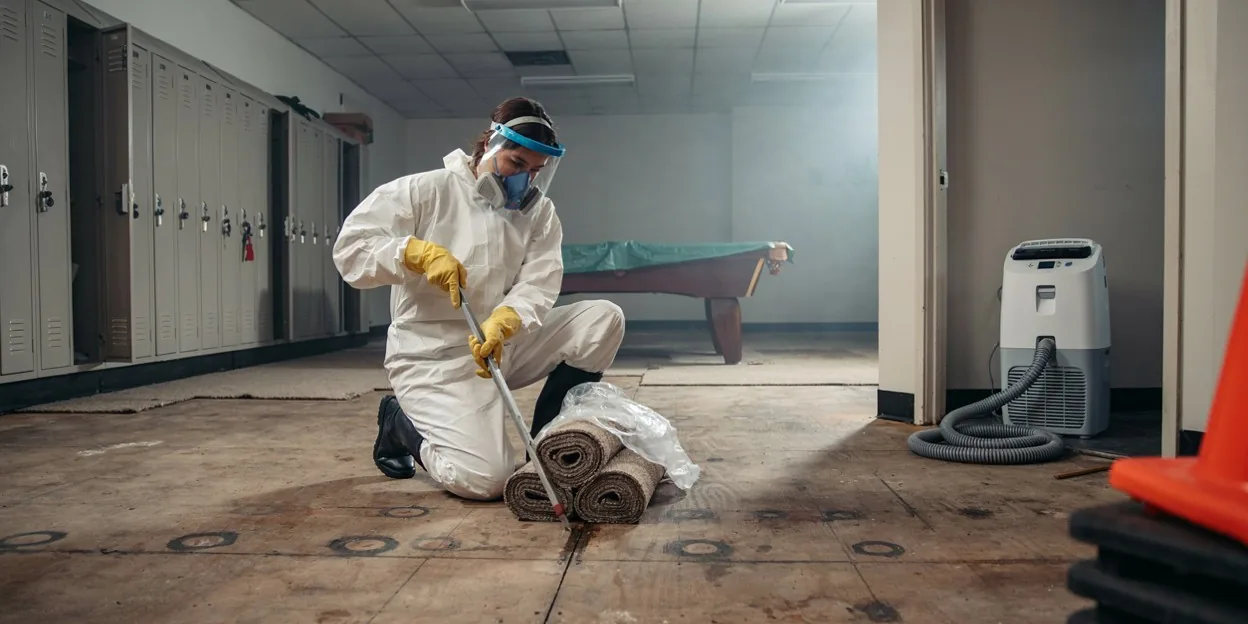
Water that rises out of a floor drain or a basement toilet is contaminated, and the crew treats it as contaminated from the first minute. That changes the job. The crew works in protective gear, sets a boundary between the wet area and the rest of the house, and removes the standing water with equipment that is cleaned or discarded afterward. Porous materials the water touched come out rather than dry in place: carpet, pad, the bottom of drywall and paneling, insulation, cardboard, and anything upholstered that sat in it.
Hard surfaces get a different treatment. The concrete floor, block walls, and the framing are cleaned, disinfected, and then dried. The crew meters the walls afterward the same way it would on a clean-water job, because contaminated water wicks into block and studs just as far.
Stay upstairs, and do not run a fan
Keep children and pets off the level. Do not run a box fan or the furnace fan across the wet area, because that moves what is in the water into the air and through the house. Do not flush toilets or run the washer or a shower until the line is clear, because every drain in the house feeds the same pipe. Photograph the water and the water line from the doorway. Close the door and call, and say plainly that the water came from a drain.
What leaves, what stays, and the order it happens in
The standing water leaves first. Then the carpet and pad come up and go out in sealed bags, along with any drywall and paneling that read wet at the base and the insulation behind it. Contents get sorted at the door: hard, washable items are cleaned and kept, and porous items that sat in the water are photographed and discarded. The floor and the exposed walls are cleaned and disinfected. Only then does structural drying set air movers and a dehumidifier, and the readings are logged until the block and framing come back to dry.
If the water rose high enough or spread far enough, the crew scopes the whole level as a basement flooding cleanup with a contamination step added at the front. If the cause was a sump pit that filled with groundwater and overflowed, that is a sump pump failure cleanup instead, and it is cleaner water.
Why Anoka drains back up when the rivers rise
Anoka's oldest sewer lines run under the streets between the Rum and the Mississippi, serving houses from the 1880s through the 1960s, and every basement in those blocks has a floor drain tied to the sanitary line. When the Mississippi climbs past 14 feet, as it did in 1965, 1997, and nearly did at 13.9 feet in April 2023, the ground around those lines is saturated, and inflow through cracks and old joints fills pipes that were sized for a dry year. Heavy summer rain does the same thing faster: the record June of 2014 put more than 11 inches on the Twin Cities and sent water up basement drains across the north metro.
In the towns north of the city on the sand plain, the cause is more often a private septic system that flooded when the water table came up, and the cleanup inside the house is the same.
Sewer and drain backups are excluded from many homeowner policies unless you carry a water backup endorsement, and some policies cap that coverage well below the cost of a finished basement. This site cannot say what your policy pays. The crew photographs the level before removal starts and logs what was taken out, so your adjuster has the record.
Calling about water from a floor drain
Say where the water came up, how far it spread, whether it is still rising, and whether the basement is finished. Say plainly that it came from a drain. Call (763) 363-6050.